
In the photo above, Bridget and Boots are at ‘pause and wait’ while I explain the next part of their task.
How does our horse know when we want him to stand relaxed beside us or when we want him to do something?
It is essential that we learn to manage our body langue to make it crystal clear to the horse when we are asking him to do something and when are in pause/no intent/ relaxed mode.
Horse sensitivity to the body language and intent of others is much more refined than ours because it is their primary language. In humans this ‘reading of body language’ has been dulled because we talk so much.
But we can stop talking and become aware of what our body language is saying to the horse. Body Language includes our orientation to the horse, our energy level, our breathing rate, our heart rate, our body temperature – these all communicate our level of calmness or agitation to the horse. To that we add the intent we hold in our mind.
Once we have a good awareness of our body language, we can begin to use its different aspects to communicate more clearly with our horse.
No Intent

In the photo above I am standing at ‘pause’. My orientation is not directed at the horse, my energy is down. I’m looking nowhere. My hands are quiet laid across my belly. My shoulders are relaxed. My breathing is slowed down, which also lowers my heart rate. My mind is quiet, not thinking of the next thing to do. This posture shows the horse I have no ‘intent’, allowing her to also relax into the ‘wait’ time.
Intent
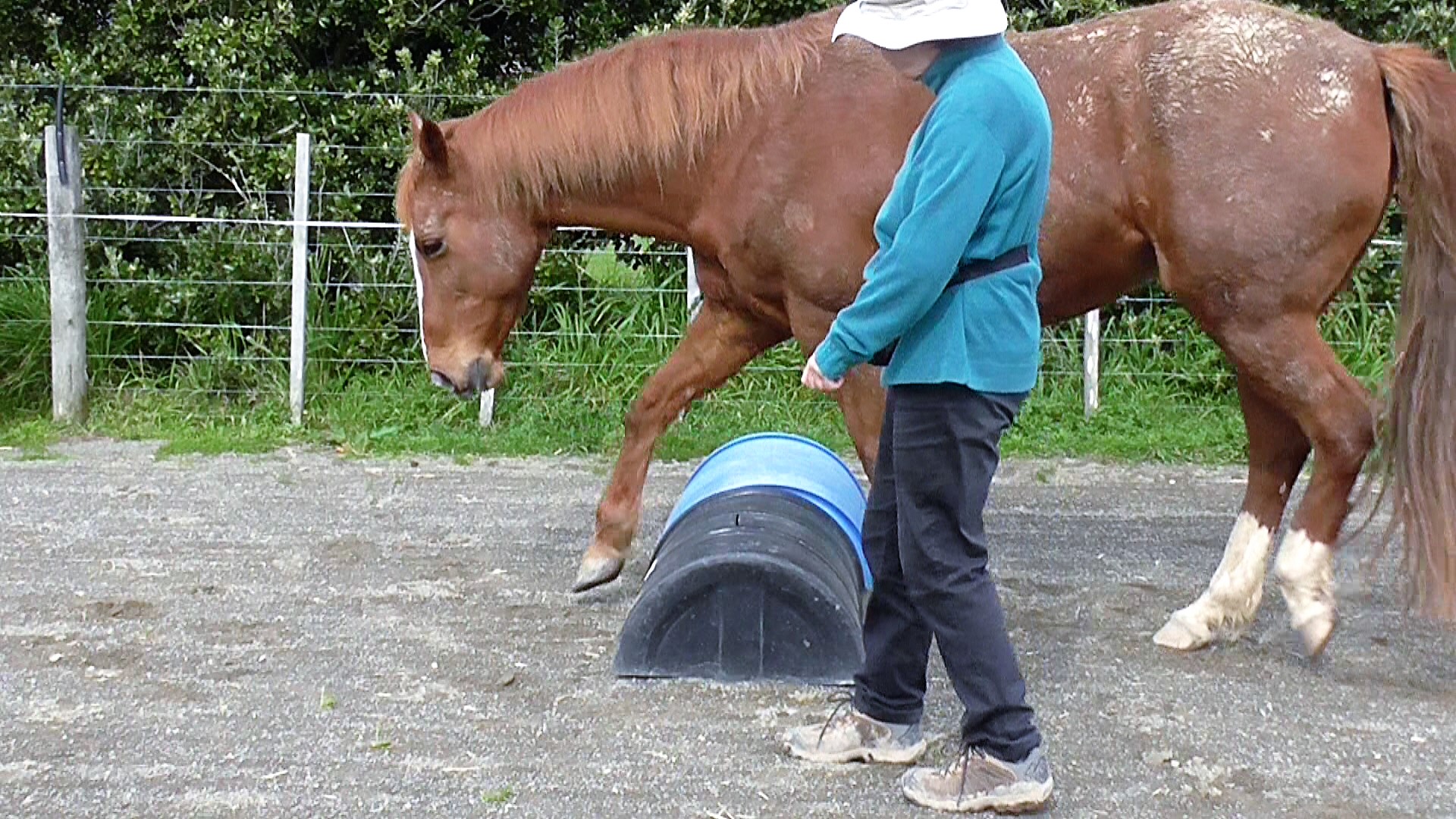
In the photo above, my body language expresses clear intent that I would like Boots to step across the barrels. My focus is where I want her to go. I’m indicating ‘walk on’ with my outside arm and I’m stepping along with her.
Emotion Exercise
Find a stick and an inanimate object you can hit hard with the stick.
First, hit the object as hard as you can three times. Channel a time when you were angry or frustrated and put those feelings into thrashing the object. Your breathing, blood pressure and temperature will go up.
Second, kneel down beside the object and caress it lovingly. Channel your soft feelings for your horse or any other living creature. When you feel nicely relaxed, go back to hitting the object violently three times. Then kneel down and caress it lovingly.
Repeat a few times. Be sure to do this where it won’t upset your horse, dog, chooks, children, friends, partners, passer-byes or and other farm animal in the vicinity.
Take note of how your emotions mirror your actions. Keep this awareness. Horses need us to be calm and collected, especially when things go awry. If we are not calm and collected then the horse has no chance of being so.
No Intent

We can express ‘pause’ or ‘no intent’ sitting down.
Intent
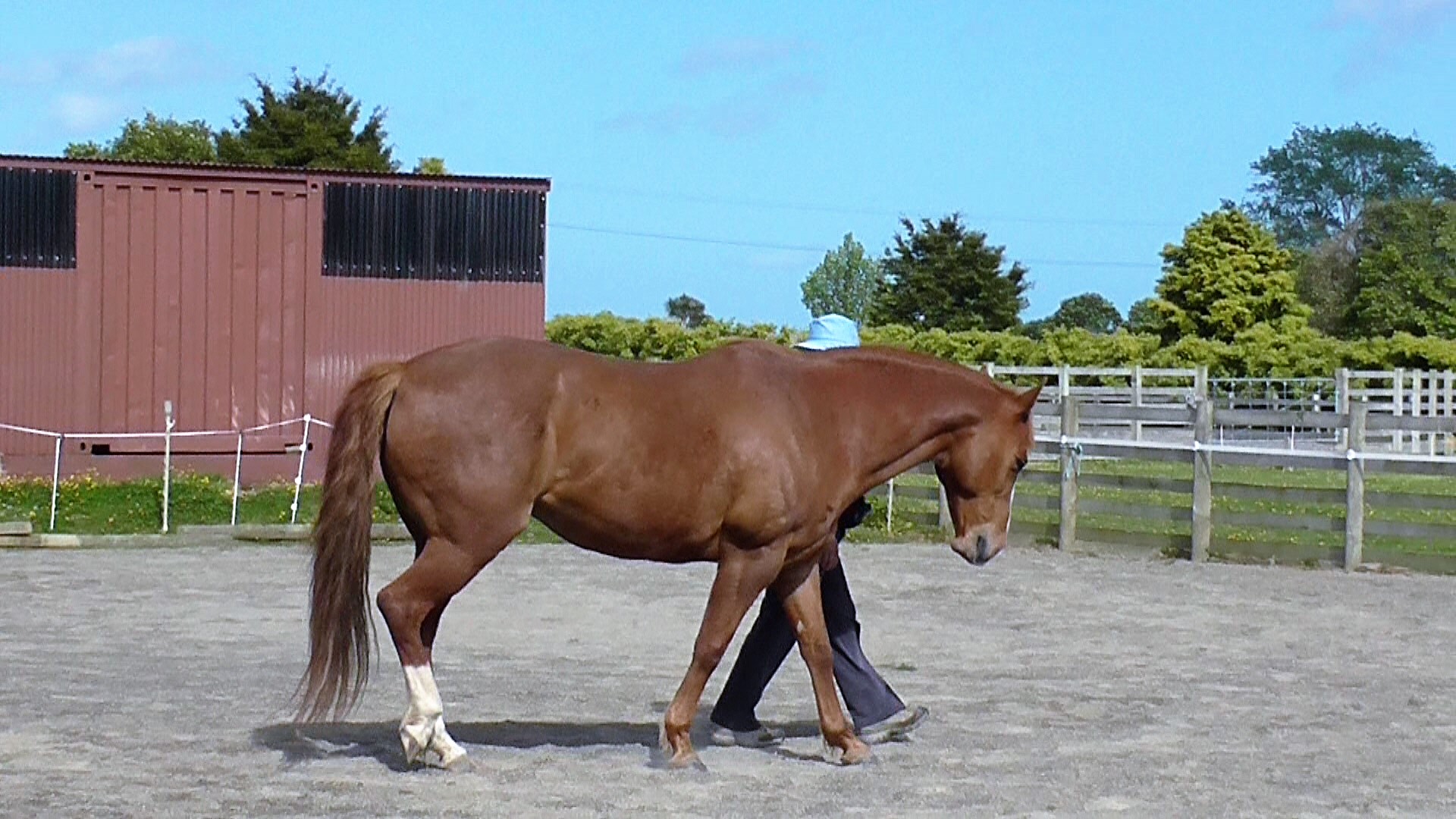
My energy is up, I’ve asked her to walk with me and and while I maintain the increased energy and keep moving, she will move with me. When I come to a halt, I first drop my energy, release a long breath out and drop my weight down into my butt. And because I’m human, I also say, “Whoa”.
Strongly Reward the Pause or Wait Time
It makes sense to click&treat when the horse moves in the way we are asking. It makes equal sense to reward when the horse can relax into a pause/wait. We are not doing nothing. We are teaching active inaction. It can be difficult for horses to learn when most of their interactions with people caused movement or pain or restriction.
If you have already taught your horse to enjoy putting his front feet on a mat to earn a click&treat, use the mat to start building duration of the pause/wait.

Eventually we can incorporate ‘parking spots’ and have the horse WAIT while we stand in different positions around him. I am in my ‘no intent’ pose in a position where she can see me in her peripheral vision. It takes time to build up the duration. In each new spot start again with a few seconds and work forward from that.
Use a High Rate of Reinforcement
If the horse can stand still for 1 seconds, click&treat. Pay attention to your own body language. Start with whatever time the horse can offer, adding one second at a time before a prompt click&treat. Make sure the horse is not hungry and not needing to move to release pent-up energy.
Keep sessions short enough to maintain calm (you and the horse). Do some ‘pause and wait’ every time you are with the horse.
This video clip looks at using a mat to build duration. Number 9 in the Blog Contents List (link at the top of the page) has a number of detailed videos about using mats.
This video looks at staying parked while the handler moves further away.
A couple of more recent clips.
 herthamuddyhorse