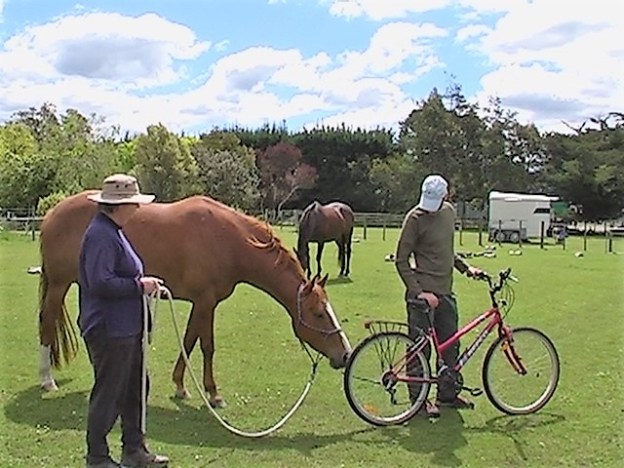
Guided shaping is when we set up the environment in a way that encourages the horse to offer a behaviour we would like to develop – in this case putting his nose on an object. We may have the horse on a halter and lead and give him a few ‘pointers’ along the way. The aim is to make it as easy as possible for the horse to figure out what will earn the clcik&treat (i.e., the behaviour we want.)
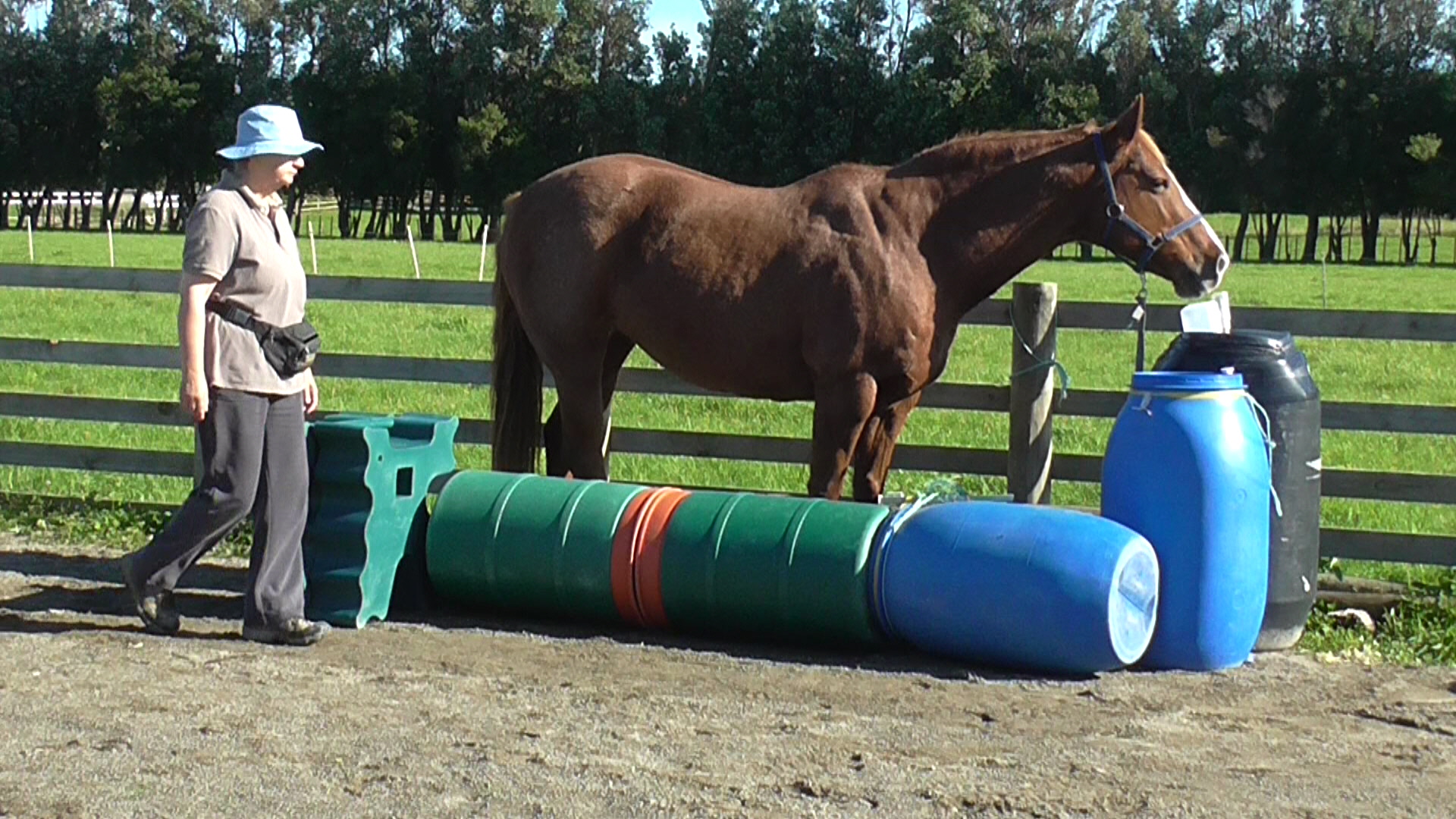
Here I’ve set up the environment for teaching relaxation in tight spaces – essential as a prerequisite for trailer loading. She is wearing a halter and lead, as we’ll usually have to do when trailer-loading. I’ve asked Boots to walk into the ‘dead end’ space where there is a nose target (white bottle) and given her a ‘wait’ signal. Then I walk behind her, then forward to her front again, before a click&treat. I want to be able to walk to the back and forward again at least three times without her wanting to back out, before I ask her to back out. When we load into most trailers we have to walk to the back (and out of the horse’s view) to shut the tailgate.
Shaping ‘Touch’ with Your Nose’
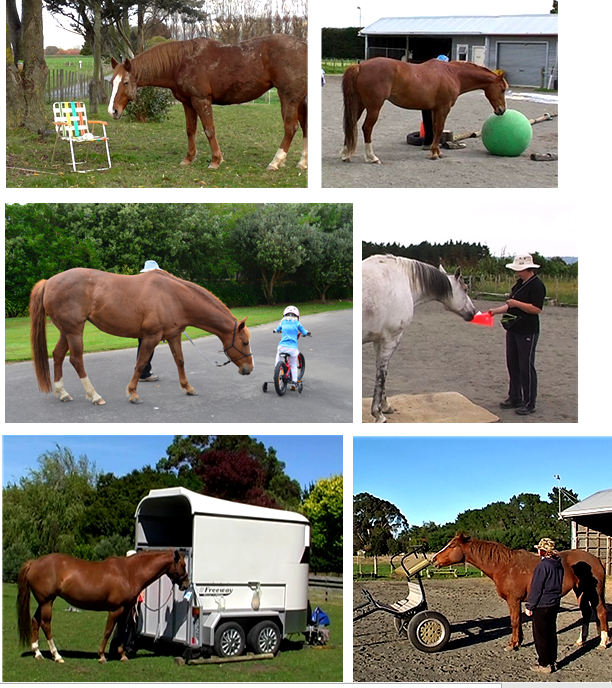
Targeting many different things to earn a click&treat does a lot to build a horse’s confidence. We usually start as in the fourth photo above, with a handheld target, and teach a ‘touch’ voice signal once the horse understands that putting his nose on an object will earn a click&treat.
Teaching confident touching of the nose to unusual objects and obstacles at our suggestion, is a good way to begin building confidence with new things. The more different positive ‘touch’ experiences the horse has, (built up with a little bit each session) the bolder he becomes.
If the horse is wary about putting his nose on the object you’ve chosen as your first target, It can help to rub fresh grass juices on it, or a wet peppermint, or a slice of apple, in order to increase their curiosity.
Once the horse understand the ‘touch’ voice signal using his nose, we can expland to touching other body parts to a target.
Teaching TOUCH with Other Body Parts

The goal behaviour here is to raise her knee to a target. This is an excellent skill to teach to develop the horse’s ability to shift his weight to achieve confident balance on three legs. It is a game changer when it comes to hoof care, because lack of balance on three legs training like this is the root cause of many horses’ struggle with hoof care.
The task in the photo above was begun by touching the target to the horse’s knee, click&treat. After a while, I held the target a fraction above the knee and the horse quickly learned to lift her leg to make the touch connection: click&treat. Then I could hold the target further up and she quickly learned to raise her leg higher. After a while I added our verbal signal (touch) to the action, and could simply use my hand as the target.
Eye to Hand
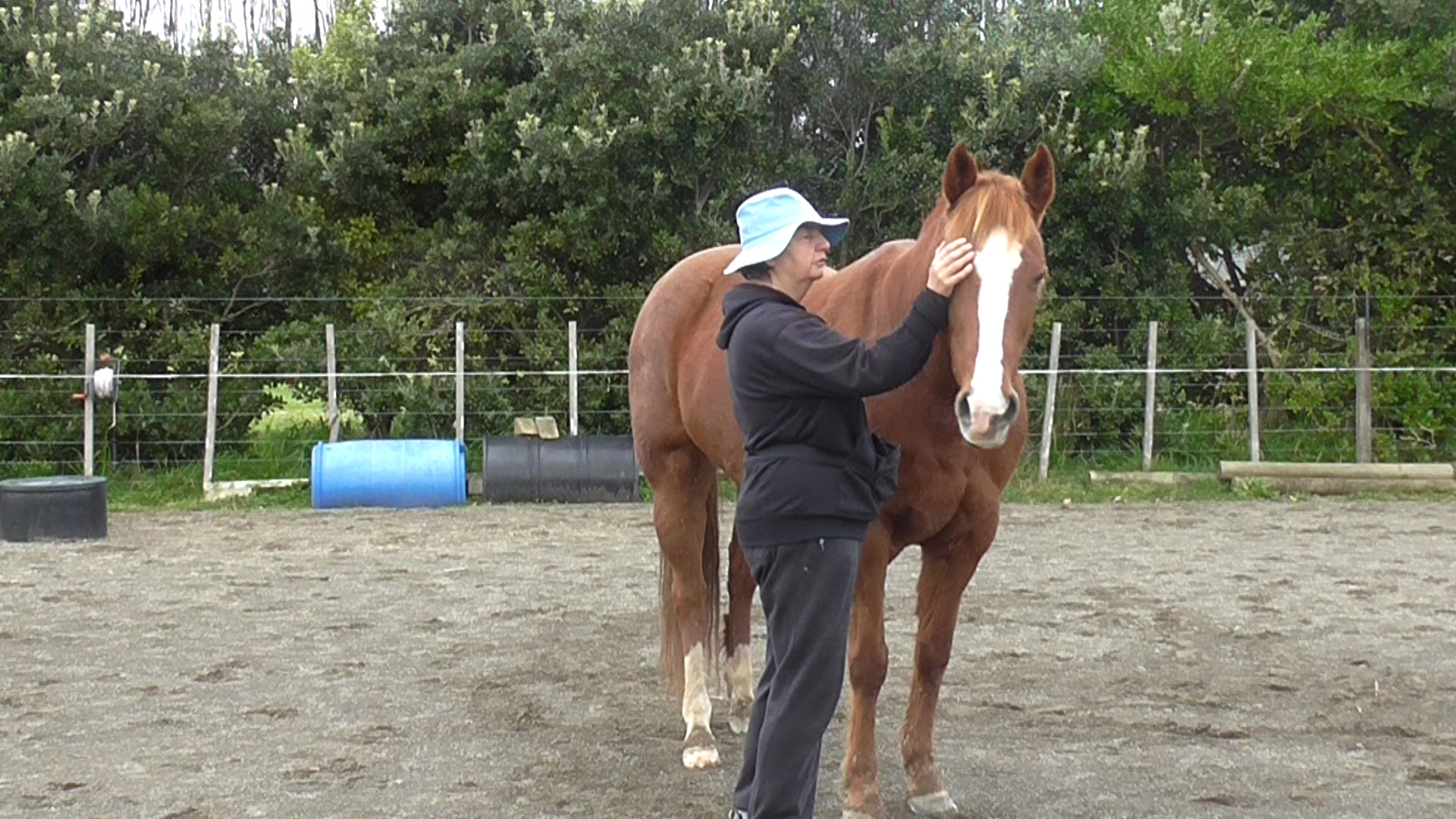
Boots targetting my hand with her eye. Very useful if we ever have to treat eye infection or injury. She also learned to target her ear so my hand, for the same reason. Some process as described above: touch eye/ear gently – click&treat. After a while, hold your hand a tiny distance away and wait for the horse to make the contact – click&treat.
Chin to Hand

Targetting her chin to my hand. Same process as above.
Using the process described, we can teach lifting the hind feet to a target (front feet = Number 59 in the Blog Contents Quick Links, and hind feet = Number 74) , moving the shoulder toward our hand (Number 27 in the Blog Contents Quick Links) , moving the hindquarters toward our hand (Number 28 in the Blog Contents Quick Links). Stepping back to touch our hand with his withers or his rump.
Stretching the neck to touch a target.

Neck Bending: I started by asking for just a slight bend to touch the target. Then as she understood the task, I gradually asked for a bit more.
Butt Bingo
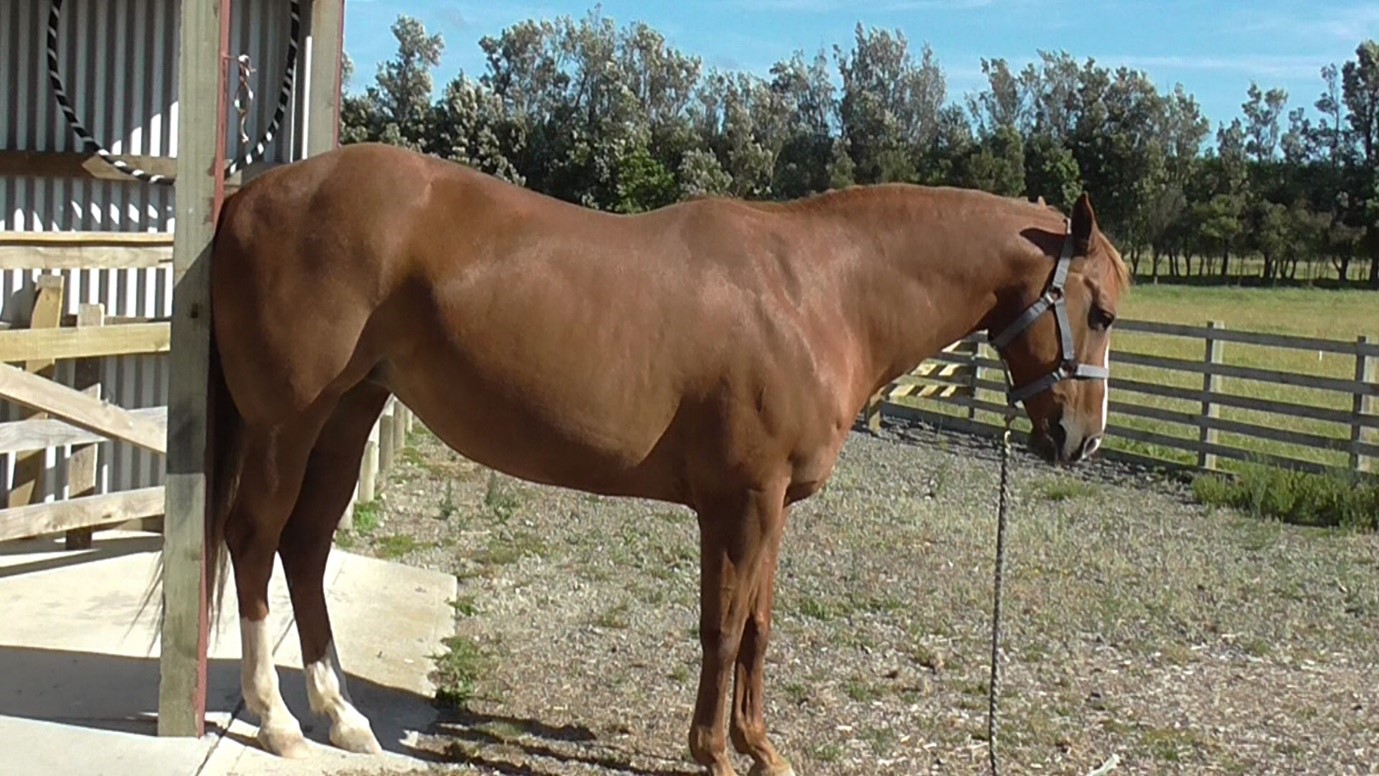
Backing the butt to touch a solid upright: We started with safe fences, walls and hedges, then graduated to barrels, big cones, trees and things like this 4×4 post. It’s an important exercise if we want to put our horse in a trailer and close up behind. Here she looks rather proud of herself while she waits for me to deliver the treat after the click. We did one or two repeats of this, often, over a long time. It was a prerequisite for backing between the shafts of a cart, as in the photo below.
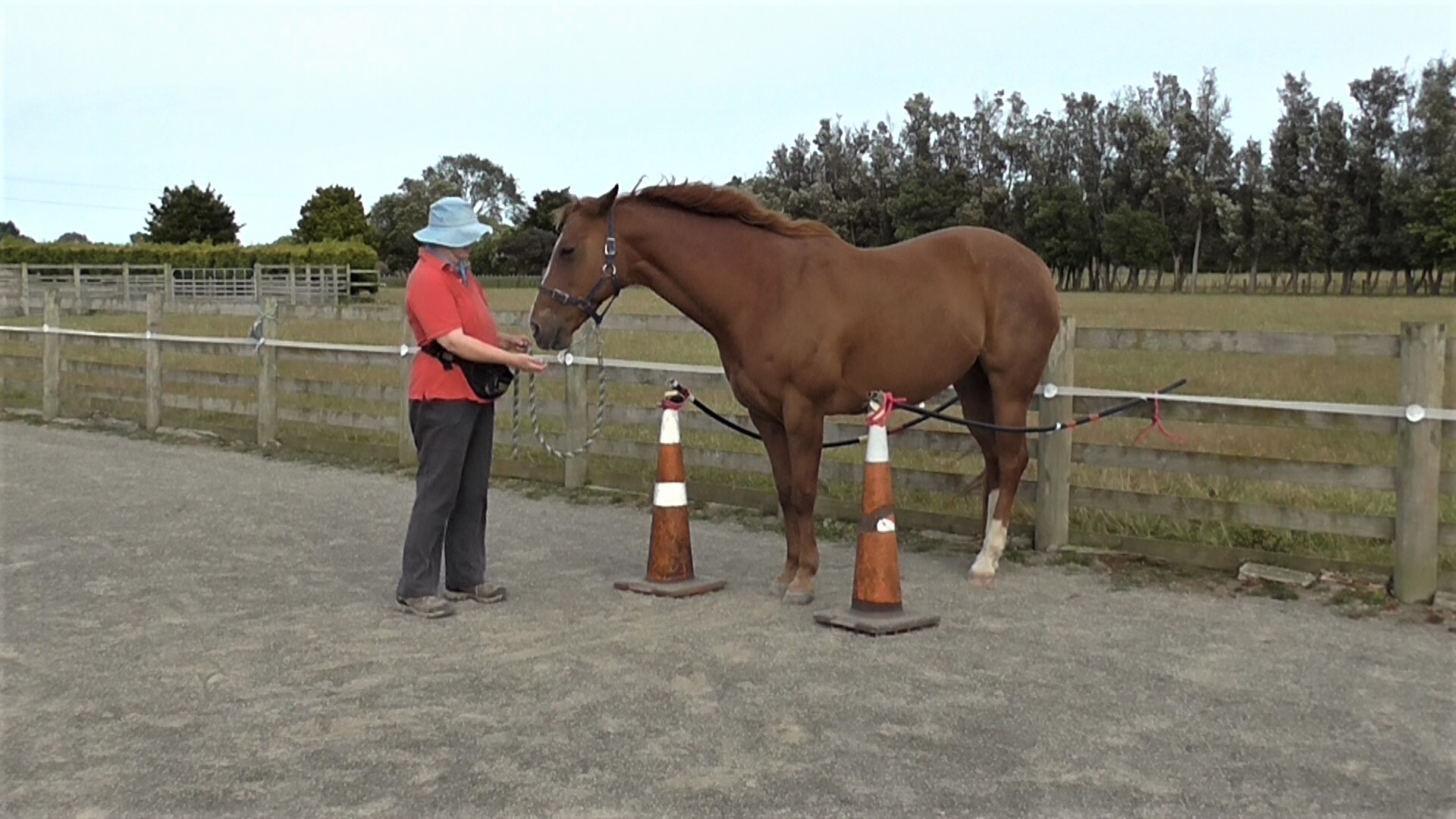
If we want to teach backing between shafts in preparation to teaching driving, we can use simulations like this that will come apart if the horse gets startled. I taught backing butt against many safe solid objects before adding the pretend shafts.

Months of preparation, with many stages, which started with just targeting all parts of the cart, allowed hitching up to be a relaxed process.
What will your horse voluntarily touch?
Have you taught ‘voluntary touch’ with any of his body parts other than his nose?
The blog below looks at Seeking the Horse’s Consent Signal, (also often called a Start Buttons or similar), which can fascilitate confident touching of various body parts to our hand.
 herthamuddyhorse