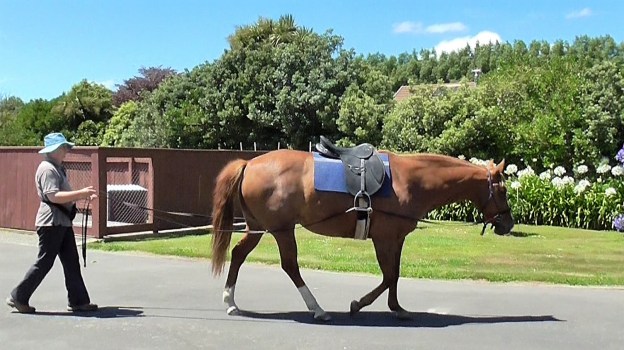
One Rein at a Time
When we hold two reins, the key is to use only one rein at a time, just as we do when riding with two reins and direct contact. If we don’t give a clear signal with one rein at a time, the horse will have a problem figuring out what we are trying to ask him to do.
As soon as we have two reins in our hands, we have a tendency to want to use them both, like a steering wheel. That is not what the horse needs.
We can overcome some of this tendency if we teach long-reining beginning with just one rein. The ‘learning’ is as much for the person as it is for the horse. This was covered in the previous blog.
Clear, accurate rein handling is a human skill that requires focused concentration and much practice. A great way to build this ’feel’ in your hands is to use another person to stand in for the horse. The person can give you feedback about how your hands feel to him or her. It’s even more illuminating to ‘be the horse’ and have other people drive you around.
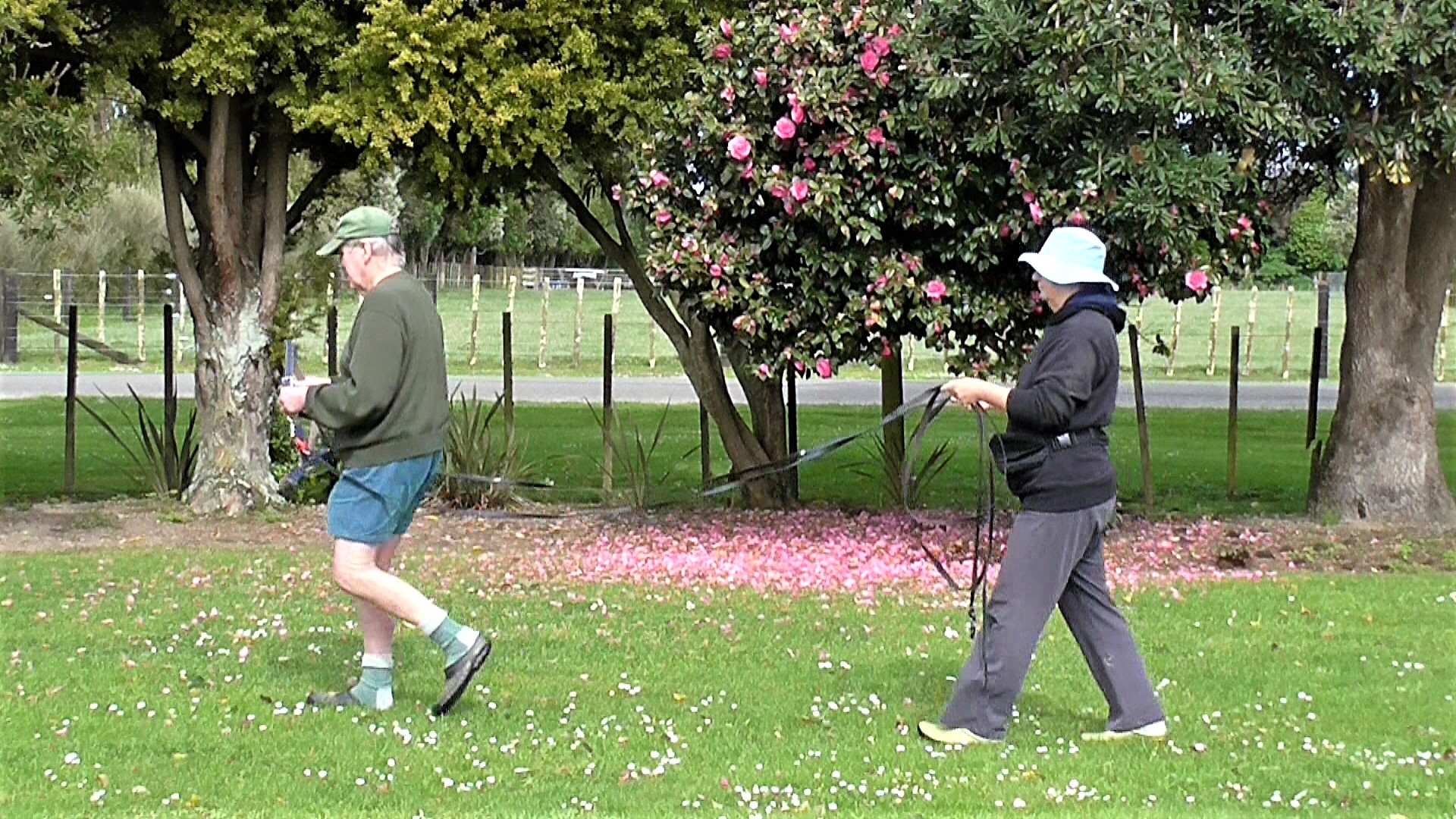
If you possibly can, have another person stand in for the horse and practice your rein-handling skills. They can give you invaluable feedback on how clear your pusing signals are and how little you have to do to be ‘felt’ even in the hands of the person.
You will find out, if you have several different ‘drivers’, just how easy it must be for a horse to either hate or appreciate a particular person’s ‘feel’ (or lack thereof).
You will notice just how much can be felt down the rope/rein. You’ll notice how some people have wonderfully quiet hands that give clear signals. Others will put so much ‘static’ down the rope/rein that you have little chance of knowing which movements are signals and which ones are not. And you will feel how annoying this can be!
What the horse needs is for our signals to be crystal clear. If we ask for a turn to the right by pulsating our fingers on the right rein, we must simultaneously loosen the rein in the left hand, so that when the horse turns his nose (followed by his feet) we are not blocking him with pressure on the left rein.
If you simply ‘pull’ on the rein to signal a change of direction, it is easy for a horse to brace against a steady pull. If you ‘pulsate’ your signal along the rein (more rope texting) by opening and closing your fingers, there is nothing for the horse to brace against.
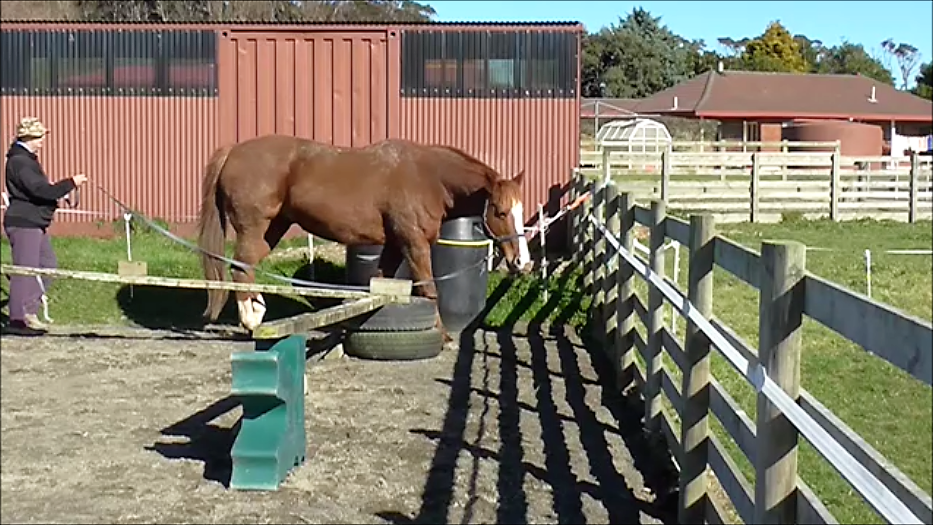
We can choose to teach LEFT and RIGHT voice signals by using a lane with a corner. I used AND GEE for right plus AND LEFT for left. Here I am using just one rein. I could have it attached to the side-ring of the halter.
The instant the horse complies, the pulsing signal stops, giving the horse instant feedback that he’s moved correctly.
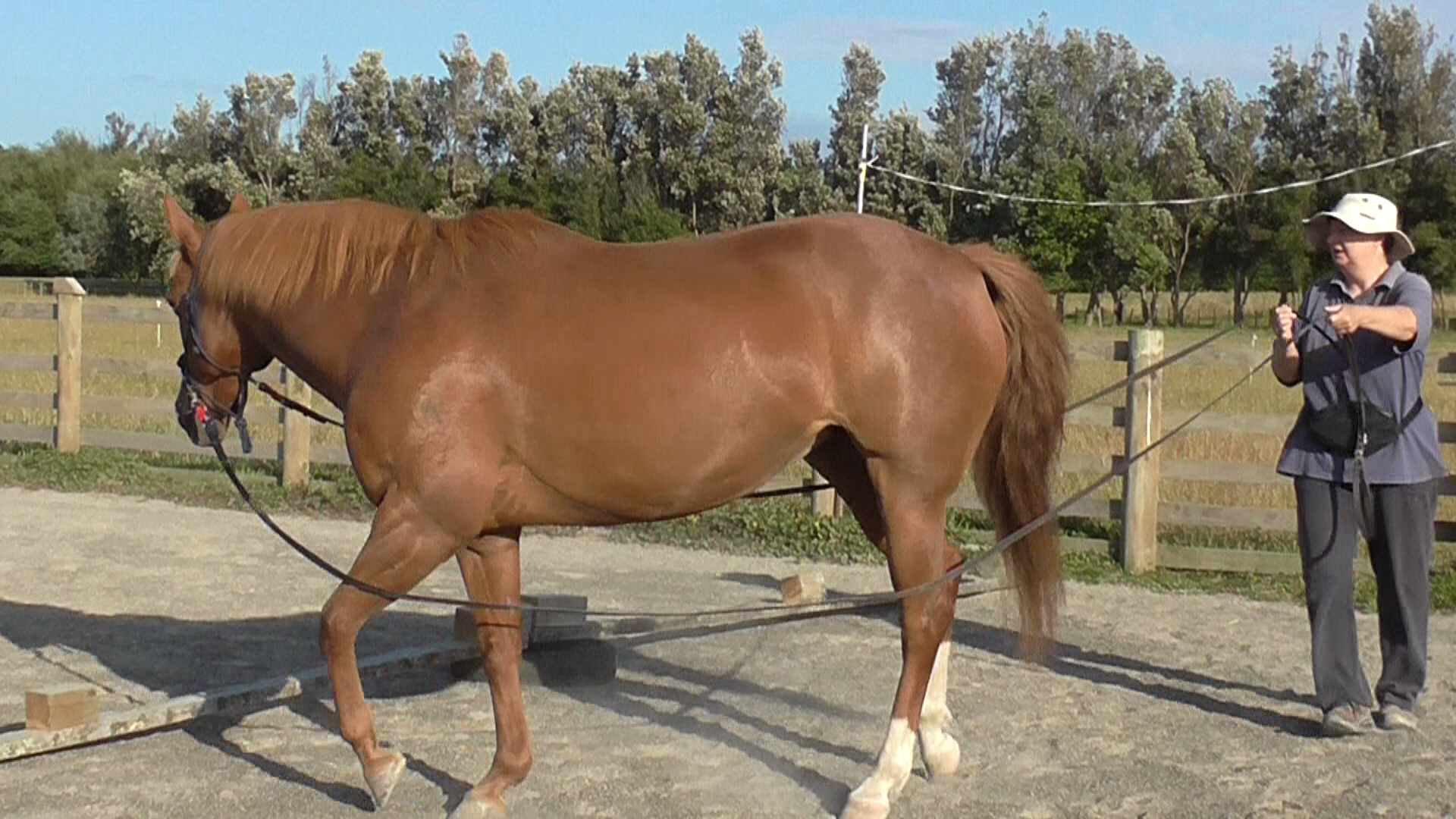
We are turning to the right so the right rein is given a slight pulsating tension in it while the left rein is relatively relaxed and quiet.
This clip also looks at using one rein at a time and then goes on to a couple of generalizations – ‘gates’ and ‘square of rails’
Long Reining with Unguided Reins
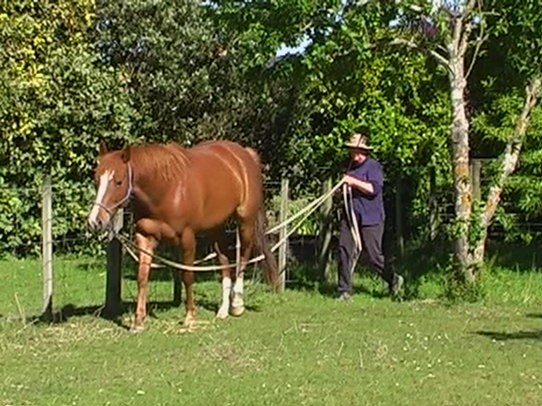
Long-reining with unguided reins.
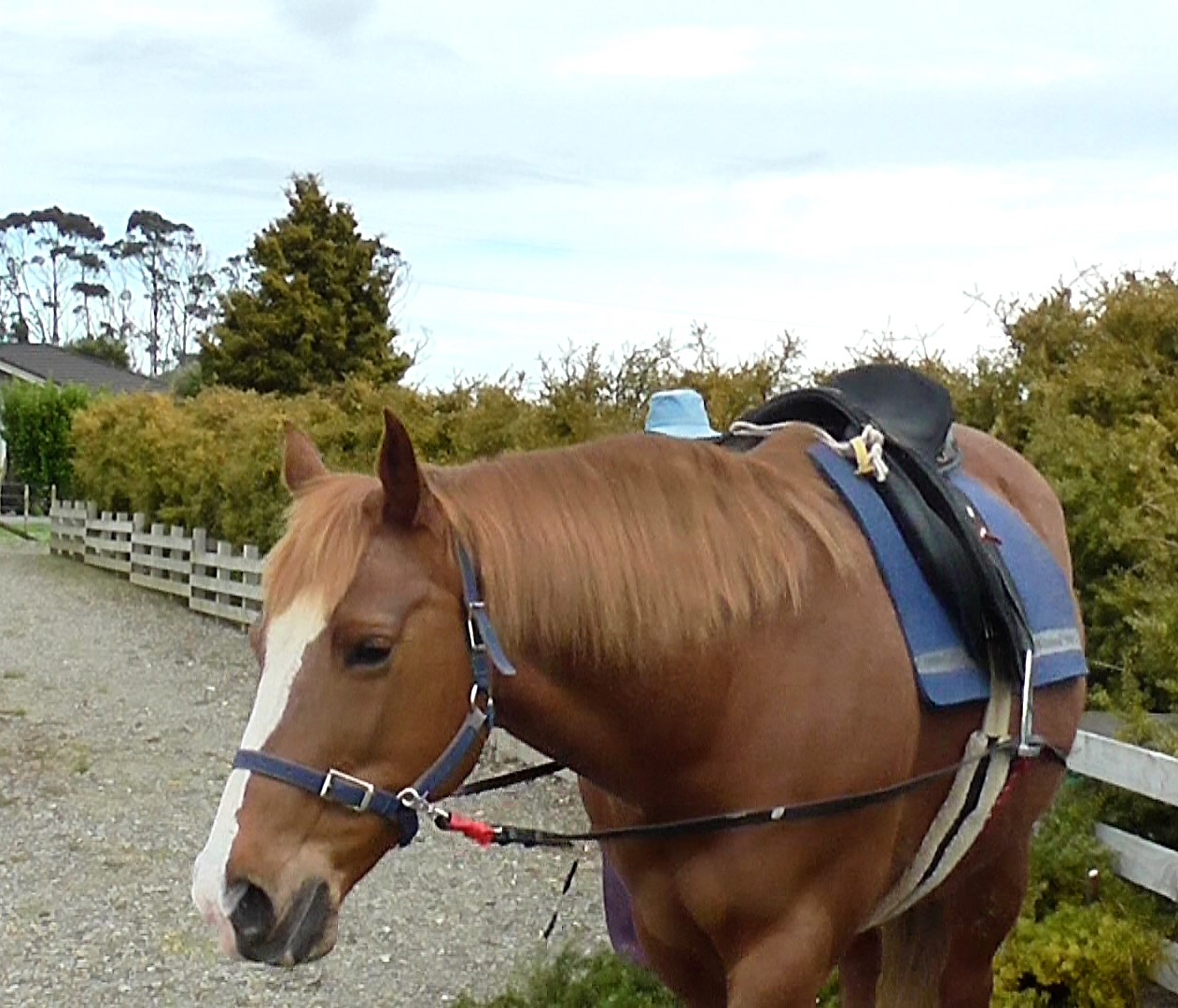
Guiding the reins through stirrups.
Gate Navigation
For long-reining out and about in the countryside, it is important to have safe ‘gate-navigation’ techniques if we are alone with the horse.
I like to walk the horse up to the gate, ask for a halt, flip the far rein over the horse’s back, click, walk to the horse’s head to deliver the treat for staying nicely parked, open the gate, return to LP6 (behind the horse), drive through, ask for a halt, close the gate.
However, if the gate is tricky and driving through is not safe, a good idea is to flip the far rein over the horse’s head, coil up both reins and use them as a lead to navigate the gate.
If it’s windy or if a gate does not hang open safely, this is always the better option. It’s a good idea to set up ‘pretend gates’ in a familiar area and use them to perfect your ‘drive through’ and ‘lead through’ techniques. A small dog collar attached to the saddle or surcingle is handy for tying up a rein.
If your reins are running through stirrups or the rings of a surcingle, you could coil up one rein and tie it to the saddle or surcingle. Then slide the other rein out of the stirrup or guide ring and use it as a lead to negotiate the gate in a safe way.
It can be easier to have the reins running through the stirrups of a saddle or the rings of a harness saddle or surcingle. But it’s also a good skill to be able to handle long-reins without this support. We have to pay close attention to the position of the reins to ensure the horse doesn’t step on them or over them. Unguided reins make it easier to flip a rein over the butt so they both lie to one side if we want to feed a treat. If we work without a saddle or surcingle, we can get away without scraping the mud off our horse for a quick lesson repeat! Horses living outdoors 24/7 use mud as an insulating material and insect repellent.

